For decades, maybe most of my life (since my father, an Earth Science teacher, started telling me about geomorphology when I was a kid), I’ve been an ardent student of landscapes. Part of that, as a professional geologist, was developing studies to characterize the geology of sites that would be developed in some way or needed to be remediated after being contaminated. In that capacity, I’m a big fan of phased investigations—do an initial study, take those results, then go deeper (figuratively, for sure, and in geology, oftentimes literally).
I was surprised to find myself thinking in that same way, while discussing the best course of action with the surgeon and oncologist when I was diagnosed with breast cancer in 2010. It was then that I began to think of my body as a landscape. And the same sense of curiosity that drives me in geological studies, helped me through the cancer treatment process.
Because it was detected early and it was not an aggressive cancer, I felt I had some flexibility in the decision-making process. Which is not to say that I dithered about those decisions (as finding out I had cancer was motivation not to delay), but I felt I could take the days I needed to consider the options presented to me.
I had that time, due to early detection. So the message I want to convey, on the eve of Breast Cancer Awareness Month, is this—do monthly breast self-exams, get regular clinical breast exams, and get your mammograms—because the science shows that early detection increases breast cancer survival rates enormously. According to the American Cancer Society, when breast cancer is detected early (that is, early stage disease, in a localized state) the 5-year relative survival rate is 99%.
Holly:
As little as a year ago, I took my unbroken body for granted. I rarely thought about brokenness, disease, or mortality, at least with respect to me. Then a routine mammogram changed all that. It turned out not to be routine at all. Today, my reflection in the mirror shows scars as proof of how close we all can be to brokenness, but I also observe a body that has healed from surgeries and chemical bombardments. I see my scars and think of the Japanese art form of Kintsugi where broken pottery is mended with gold. Just like a broken vessel, our bodies, with the help of amazing medical treatments and caregivers, can be rendered into a new piece of art, more unique and exquisite than before the break. Wholly beautiful, in truth. My art is part of my healing.
So, Holly and I—both survivors of breast cancer, and both so much more than that—found the words and hope these words speak to you, in whatever way you need them to. Perhaps you’ll schedule an overdue mammogram, or get through another day of treatment just a bit easier, or feel more deeply that you are so much more than a diagnosis, or you’ll remember to call a friend who might need a ride to the doctor or just to hear your voice. We wish you health and wholeness this Breast Cancer Awareness Monthand always.
In my last post, I chose to reframe “stuck” to “paused” and that was a helpful shift. But I have been paws-ed in another way since April, when I met a tiny puppy the day after she opened her eyes. The grandniece of our beloved Capi, this tiny Coton de Tulear puppy came home with us in June. Since then, she has filled the days with laughter and my heart with love.
We’ve named her Skipper, because she is running things on Kagán, and in our lives, in a most wonderful way.
So, please welcome our cute, curious, clever new crew member!
I had started a piece titled Stuck, but have decided to shift that sentiment. And so, I’ll say I’m Paused.
Given the privileges I enjoy in life, I can hardly call myself stuck. That doesn’t mean that hurdles don’t appear in the path I’d like to travel. Some of those can be leapt right over, and some require a detour around, but it occurs to me that there are times to pause—to consider the nature of the hurdle, and the way over or around. Or even to consider whether changing course all together is what I want, or need, to do.
So I am paused.
One place I’m paused is aboard Kagán. Most of the summer, we have been trying to find, and fix, an intermittent problem starting her engine. Hence, being stuck—in port. Twice we thought we had the problem solved, only to have it recur. Twice this happened while we were safe at anchor or on a mooring buoy (and more times than I kept count of at the dock). So, we were not, thankfully, adrift after furling sails as the wind died in what can be the strong currents of our cruising grounds. Now, I know what our problem is, and I feel damned lucky that we were able to make it back to our home port of Friday Harbor safely.
The problem is salt water incursion into the engine, the death knell for a marine diesel. I will be leaping the hurdle of re-powering Kagán (indeed, a long series of hurdles) during the off-season. I only paused a few moments to consider my course of action, as the desire to continue adventuring on Kagán still beats in my heart. When this race has been run (thank you for indulging me the metaphor—I ran the hurdles in college, and it feels apt), Kagán will be a more dependable boat, and therefore a safer one. I believe my re-powered boat will empower me as her skipper.
As for the other hurdles that have popped up in my path—life feels a bit like a Whack-A-Mole game these days—I’m paused. Considering.
Are you stuck, paused, or full speed ahead? What are you considering during the waning days of summer?
I am. I am not special in that. We all grieve. It’s universal, yet unique.
I have grieved before, so I thought I knew. But it turns out it is also unique for each person grieved and for each time it comes.
I have been wondering—despite having a life I feel such gratitude for, despite many good things happening in the past months, despite managing my thoughts and feelings about the news, despite having important (to me) “to dos” to do—why I can’t seem to find a rhythm to my days or a focus for my mind, why I can’t seem to make myself sit down to write, why I’m snappish too much of the time.
This morning, I finally let myself own that I am grieving. Though it’s true I did not see the friend I lost more than once or twice a year, and it’s true that his loss has not changed my day-to-day life much, it is also true that my world does not feel the same without him in it. And I don’t like the world without him as much as I liked the world with him.
I grieve my loss. I grieve for his family and friends whose day-to-day lives have changed with his loss. And for those friends, who like me perhaps, didn’t realize how much a part of their lives he was. But I also grieve that he didn’t get to do more of the things he had listed on little bits of paper just days before he died—contemplating his life after working so intensely for decades, contemplating doing more of what he loved rather than what others needed.
His many accomplishments and all he did in service to our environmental geology profession, and the common good, could fill pages and pages. But I think I’ll simply say that he was one of the finest human beings I have ever known, and I sorely miss my dear friend.
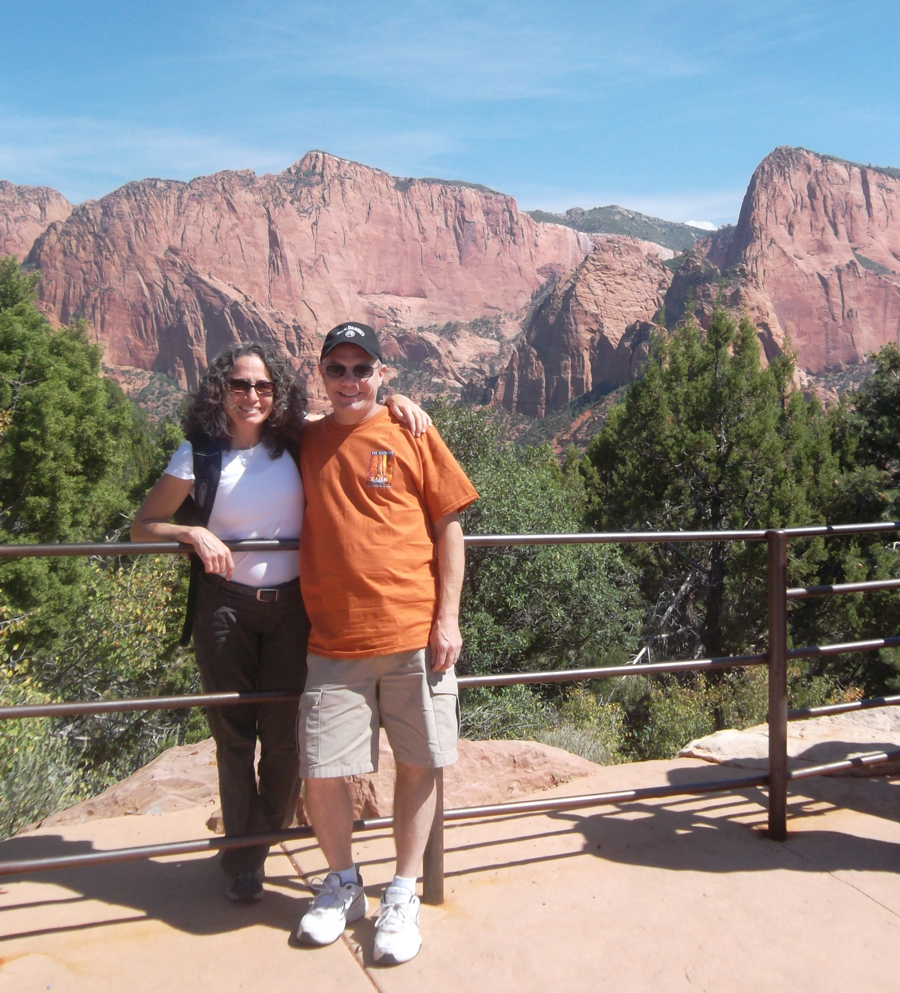
These photos were taken on a fantastic field trip at the 2012 AEG Annual Meeting.
I write this in honor of Duane Kreuger, April 26, 1970-May 26, 2024, who left those who love him much too soon.
[He was President of the AEG Foundation at the time he died. His family has asked that if you wish to honor Duane in this way, to please make a donation in his memory to the fund of the AEG Foundation you most care about. https://aegfoundation.org/]
Here’s the conclusion to Flying Lessons, but just the start to a life of adventure for young Will Ross. I hope you’ll read No More Empty Spaces, my debut novel, which picks up on Will’s life decades later as he takes his family to a remote and rugged region of Turkey where he has signed on to work on the construction of a troubled dam.
Finally, Will felt a shaky touch—his mother’s on his shoulders. She peered over his head at Lucien and said, “Good riddance.” She led Will toward the front of the house, the kitchen door swinging closed behind them. There was a pillowcase stuffed full, leaning on one of the suitcases. She handed it to Will. “There’re your things.”
He clutched at the sack to keep it from spilling over, pulling a wad of fabric tight in each hand to carry it.
With a suitcase in each of her hands and her good purse hanging over her left wrist, his mother pushed the screen door open with her hip. It screeched on its rusty hinges, like it always did. They both looked back toward the kitchen, but the swinging door remained still. A look passed between them, then Will followed his mother through the door, across the porch, and down the steps. She rushed toward Lucien’s old red beater truck, her dress whipping around her legs in the wind.
She loaded the suitcases in back, while Will climbed into the cab clutching his things.
He reached his chin on top of the pillowcase, and asked, “Can we say good-bye to Joe?”
“No, we’re just goin’, no good-byes, no one knowin’ where we’re goin’.”
She cranked the truck. It whined once, turning over on the second try.
“Where are we going?”
“Willard, stop askin’ so many questions. We’ll get goin’ then I’ll figure out where we’re goin’ to. We just gotta get before Lucien comes to, is all.” She jerked the truck into gear.
Will turned around to see the little white house, curtains fluttering in the windows like they were waving good-bye, and something told him he would never set foot in Kansas again.
He raised his hand—just a small wave, so his mother wouldn’t notice.
Bye, Gramps. Bye, Joe. Thank you, he thought. Bye Scout, old pal. Bye Tuck. I’ll never forget you, but I’m gonna fly. Up and away!
Geologists study the earth and the processes that shape it. Writers study the human heart and the processes that shape it. The GeologistWriter builds a bridge between the two. Come across it with me!



Recent Comments