A natural event can become a disaster when humans are in its way—like the earthquakes in southeastern Turkey beginning during the early morning hours of February 6, when thousands upon thousands were asleep in buildings that could not withstand the shaking they were subjected to.
I see the images and hear the broadcasts. I send money to provide tents, food, and support to mobilize rescue workers and medical teams from around the globe. But it feels like so little in the face of such suffering .
Earth processes affect us every day. Geologists know this, but most people are not aware of it, until something happens—like a flood, a landslide, or an earthquake. Though it is difficult to find words in this moment, I feel compelled to try. Geologists, like me, study the earth, its structure, and the processes that shape it. And writers, like me, tell the stories of human hearts and the processes that shape them. How could I not try to put words to paper about what is unfolding half a world away? Understanding the science, and relating it to our very human stories, is what led me to the work I am doing.
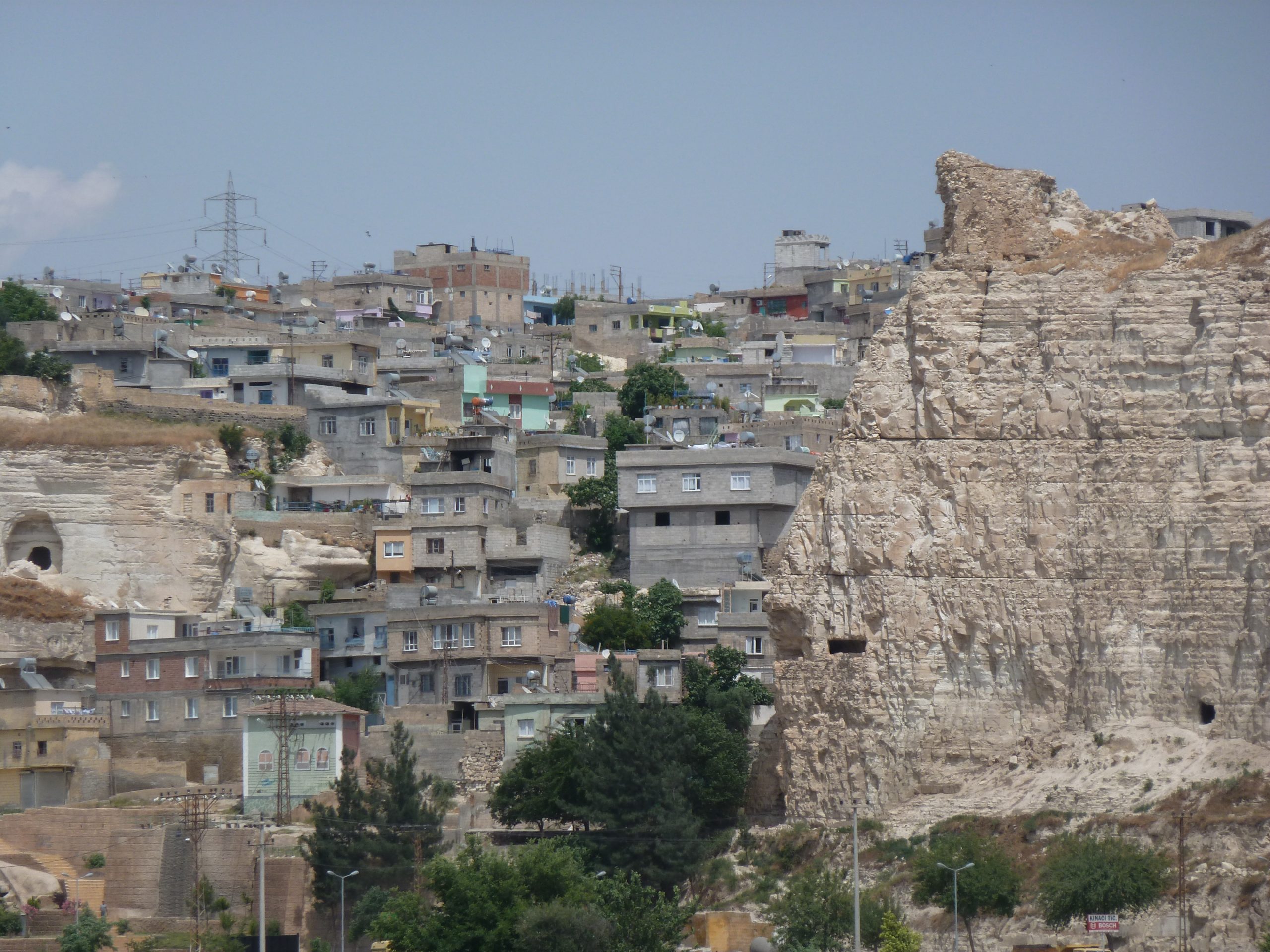
I am fortunate to have traveled extensively in this part of Turkey, and have such vivid memories.
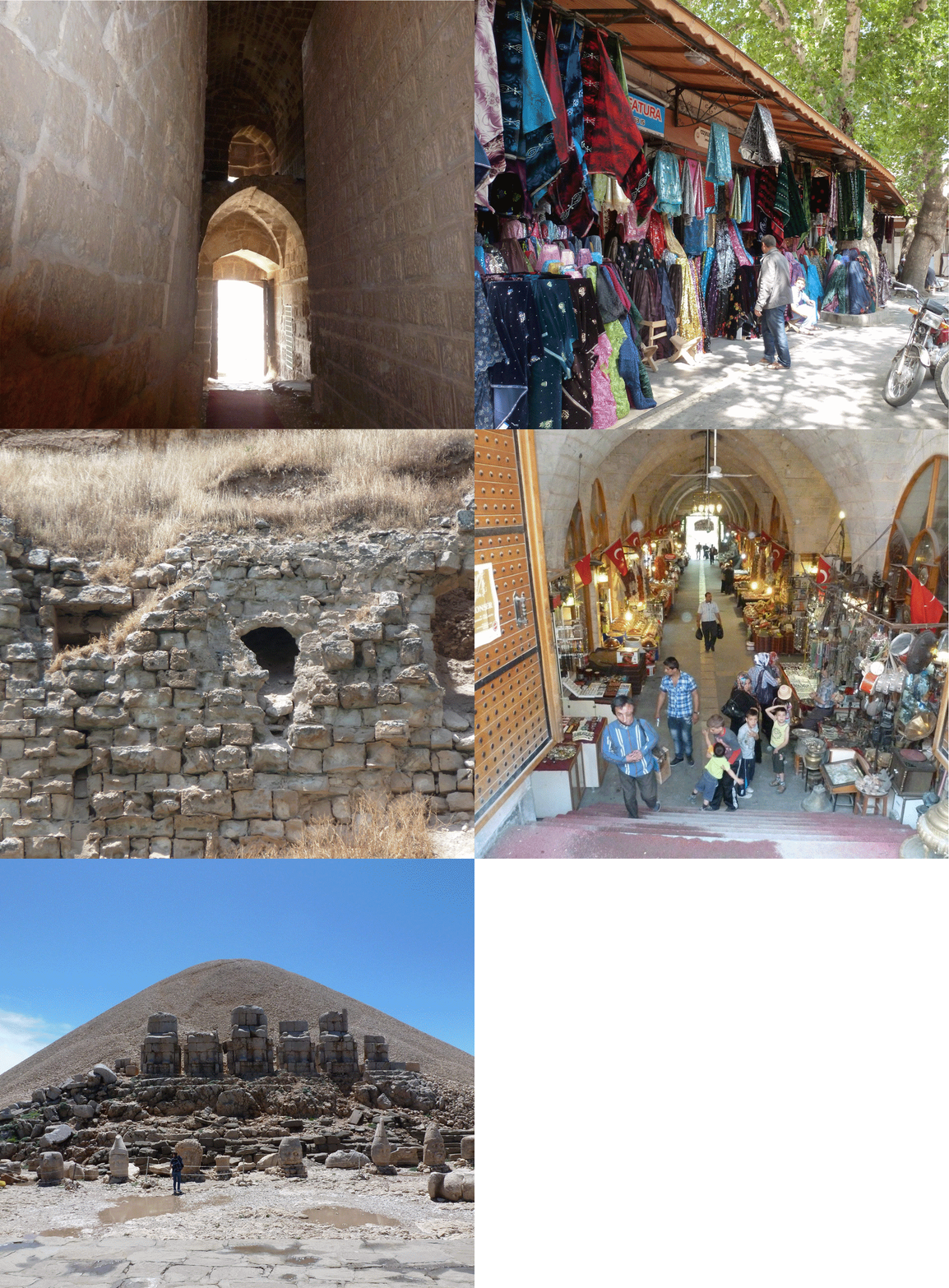
Exploring Gaziantep’s Castle, and looking over the city spread out below from its walls.
Strolling through, and shopping for scarves and sweets, in Şanliurfa’s market.
Seeing acres of apricots drying in the sun near Malatya on a hot summer day.
Savoring the ice cream particular only to Kahraman Maraș or the baklava in Gaziantep.
Sleeping in a caravansary-turned-hotel in Diyarbakır.
Marveling at the tumulus and statuary atop Nemrut Daǧı, some toppled in previous earthquakes.
Now, in newsreel after newsreel from these cities and beyond, I watch buildings collapse. I read of World Heritage sites damaged or destroyed in the intense shaking. I hold my breath watching miraculous rescues. And I dread to hear of the many who will only be recovered in the coming days, weeks, and months. I fear for the people, like the friendly çayji in Gaziantep who chuckled at my very broken Turkish as I stirred a sugar cube into my tea and we chatted. Is he hurt? Is he even alive as I write these words?
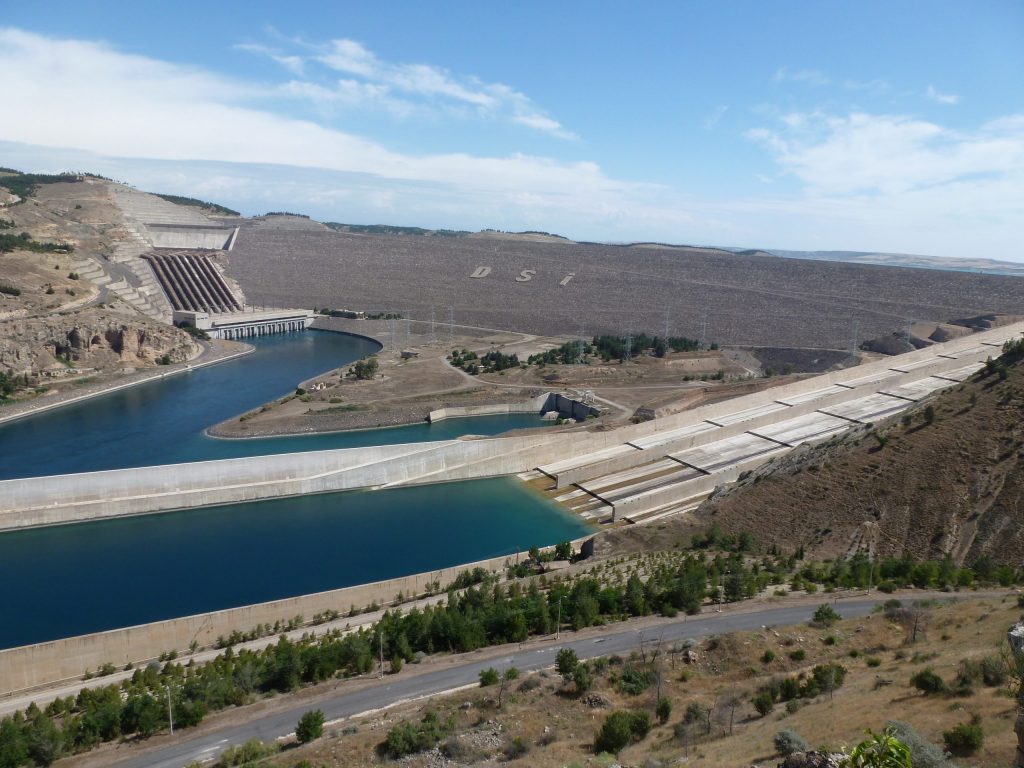
I have written a novel that takes place so near this earthquake’s epicenter that my characters would have been woken, perhaps even thrown from their beds, by the force of the temblor. Many of the characters in the story are geologists and engineers working to construct a fictional dam on the Euphrates River. But there are three very real dams—Atatürk, Karakaya, and Keban—on the Euphrates which almost certainly experienced moderate to severe shaking in these events (though I do not have specific data, I say this based on my understanding of the geology of the region and these structures’ proximity to the East Anatolian Fault Zone). I wonder how those structures have fared, because it is not earthquakes per se that kill people, but structures failing that do. The pictures we are seeing in the news show that all too well. If any of those dams were to fail, the level of human suffering, already almost too much to comprehend, would intensify.
I can only hope that the immense suffering will diminish soon, though for those who have lost loved ones or their homes or their livelihoods or have been injured, I know it will be a long, long road. I can also hope that scientists and engineers learn all they can from these earthquakes, and know that groups like the Geotechnical Extreme Events Reconnaissance (GEER) sponsored by the National Science Foundation and the Earthquake Engineering Research Institute (EERI) will do their utmost to do so. I can hope that politicians will listen to the scientists and engineers and fund needed programs, so when rebuilding does occur, structures will be stronger and safer.
Because we will always be affected by the ground beneath us, we must learn to live upon it, admiring its splendor while also respecting its power. My heart is with the people of this beautiful region in these devastating days.
If you want to support relief efforts in Turkey and Syria, here are links to articles in the Washington Post and New York Times that may help you choose how:
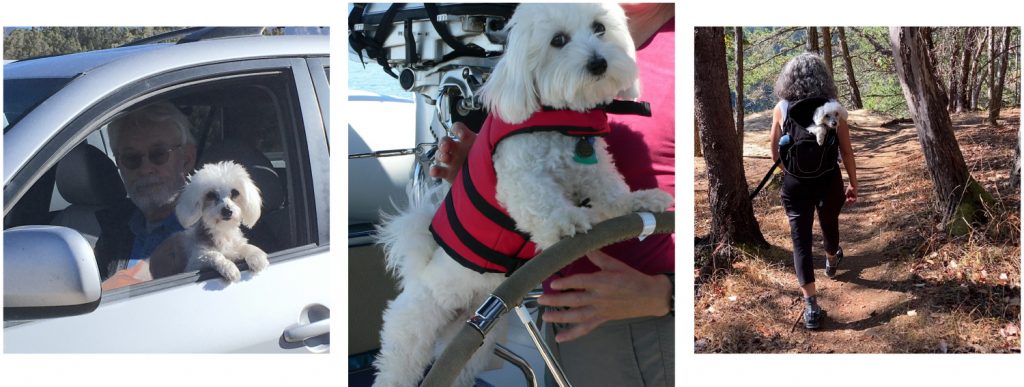
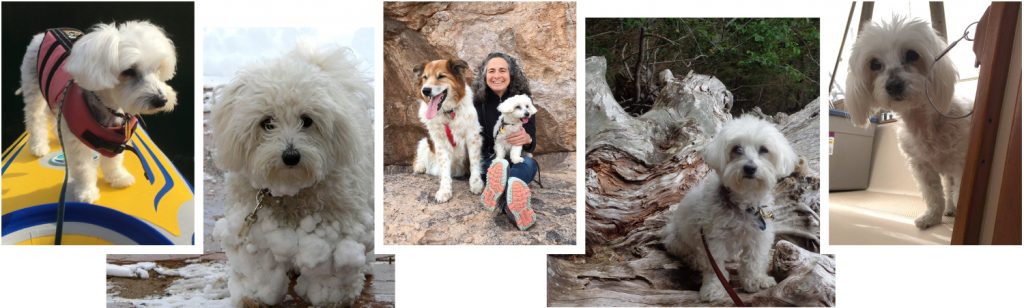
Small in size doesn’t necessarily mean small in spirit. Though our house no longer holds our little dog, Capi (who passed peacefully, here, with us by her side, on December 9, 2022), her spirit certainly lives on in it.
Capi was undeniably cute. But ask anyone who knew her, and that won’t be what they recall first—rather her fearlessness and enthusiasm for every adventure, every moment, really—might be what lives in their memory. Neither five-foot seas, nor snow deeper than she was tall fazed her. And guess who was the alpha of our dog pack—Capi or her 50+ pound mixed-breed older brother, Sandy?
Capi was, in a word, intrepid.
A year ago, Capi’s vet said that if all she had done was look at Capi’s test results and images, she would say that Capi had days, weeks at the outside, to live. But Capi didn’t believe it, and she proved it over and over. Months later, as we prepared to leave for Capi’s last summer of sailing, I worked with the vet to put together a medical kit for her, but the doc’s conclusion was that “Capi Magic” was her best medicine. That magic not only kept Capi going, it gave us a good dose of delight every day of her life.
We had a few rough patches in the cold wet days of the last Pacific Northwest spring, but mostly Capi decided that she’d embrace each day with joy and love. She took me for daily walks, rushed if it was rainy, longer on sunny days, often right to the shops where she knew she would to get a treat or two (thank you especially to The NW Dog in Poulsbo!).
Intrepid to the end, even during her last days, she ambled a bit every afternoon and rode to the mailbox, head out the window savoring the crisp December, desert air. This is all I can bear to write, as I am sorely missing my amazing furry friend. That big-hearted little dog will live forever in my heart. Always intrepid, and always reminding me that I can aspire to be intrepid too.
Someone says something, and you’re struck dumb. Perhaps dumbfounded is more like it. Would someone really say that? Too often it’s family—Uncle Aren’t-I-Funny? or Aunt No-Filter. Or maybe it’s Ms. or Mr. I-Don’t-Even-Know-You-And-Still-I’d-Say-That.
Haven’t we all been there?
At 2:06 the next morning, you bolt upright in bed, your voice restored, the perfect line drops from your lips with no one but the beloved four-legged curled up at your feet to hear it. Or maybe your partner rolls over and mumbles, “What?” then snuffles and falls back to sleep, heedless of your brilliant retort.
Even though that is so often the reality for me, as a writer I get to say that perfect line—on the page. Sometimes on a page in my journal, my snappy (if hours or days late) comeback for me alone, but sometimes on a page others will read.
The perfect line that sticks in my mind most came to me 25 years ago. Some of my readers know that my husband, Norm Tilford, died in November 1997. Some of you know he perished when his small plane went down in icing conditions in a remote part of the Texas hill country. And some of you may even know it was a month to the day that his plane, and his body, were found by a hunter who noticed that the top of a tall tree looked different, broken, since the last time he’d been out that way (and he’d read the ad I’d run in the Blanco County News, among many other rural newspapers, asking people to look for the plane).
During the month Norm was missing, hundreds helped with the search—Civil Air Patrol pilots, family, friends, professional colleagues, and even kind strangers. It was much publicized, a choice I made in the hope that the more who knew, the better the chances someone would find the plane, and Norm. Small planes are hard to spot in big country, and I dreaded being one of those stories in which it was located too late, a rescue turned to a recovery.
Upon arriving home after a day of searching lake shores for debris, the phone began ringing as I unlocked the door. I ran to pick it up and “someone” said that “something.”
It was decades before I could write about it. Here is an excerpt from the personal essay I titled Not the Real Estate (evoking Norm’s oft-spoken belief that “home is where we both are, not the real estate”):
I worked with the Bryan Police Department, depending on Zeta, the officer who worked on their missing person cases. She leveled with me from the start.
“More often than we like,” she said, “these cases have a negative outcome.”
She gently asked questions about our marriage, made helpful suggestions for the search, and provided perspective I didn’t want to hear but needed to. She conceded, reluctantly, her large brown eyes wide and caring, there was always a chance.
I fielded awkward phone calls from people projecting their private dramas onto my all-too-public one. One woman matter-of-factly informed me that my husband wasn’t missing at all.
“Your husband ran off with one of his students,” she said, “a new young honey, just like my husband did. He’ll call to dump you, dear. Don’t spend your time worrying. Get a lawyer.”
Stunned anyone would make that kind of call, I stammered, “Thank you for your concern?” before hanging up. Minutes later, I came up with what should have been my response, “No, ma’am, Norm hasn’t run off with a young honey. I am his young honey.”
That was my perfect line.
Just to be clear, I did not steal Norm from another woman, older or otherwise, though I was quite a bit younger than he. Any stealing that went on with us was of each other’s hearts—thefts of the best possible kind. Twenty-five years later, his fearless heart still inspires me to fulfill dreams—one he gave me, to sail, and one I had that Norm never failed to encourage, to write.
Note: Not the Real Estate was published in bosque 9 literary journal in November 2019. If you’d like to read the complete story, among many other fine essays, short stories, and poems, the issue is available for purchase here.
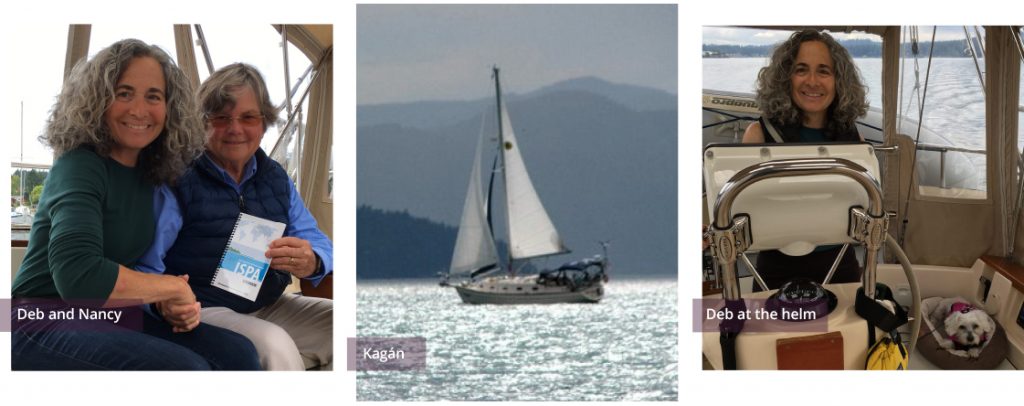
In early September, in the days after attaining my Coastal Navigation certification with my sailing mentor, Nancy Erley, I felt empowered—a confident captain of my fair little ship. I started drafting a piece titled Empowerment. According to the Merriam-Webster Dictionary (online edition) empowerment means: the act or action of empowering someone or something; the granting of the power, right, or authority to perform various acts or duties. By the time I re-opened the file after a week of end-of-sailing-season boat work, instead of feeling sure of my skills and judgement, I once again felt “not enough.” Though I certainly did not know any less on that day than when Nancy departed Kagán for home, somehow I felt like I did. It made me wonder, as noted in the definition, if I needed the power to be “granted” to me by someone else. Why can’t I claim it for myself?
I don’t love this feeling, this need to be empowered by another’s faith in me, rather than my own belief in myself. No matter how much I respect her, and my respect for Nancy is beyond measure, still I want to feel it within, and I have no doubt Nancy would want that for me—she respects me, so when will I?
I also don’t love disclosing this, but I believe there is power in going deep, in having the courage to be vulnerable as a writer. I believe that is how writers touch people most profoundly. Maybe that is one of the things I can claim for myself, courage as a writer.
Now that I consider it, even when I go from feeling like a confident captain to an uncertain one, I still get out there—sailing, cruising, and caring for Kagán—sometimes alone and sometimes with crew, but out there doing it. It seems Empowered Me and Insecure Me look pretty much the same to everyone but me. And maybe, just maybe, I’m not the only one in that same boat or on that same page.
Here’s another confession, I do love show tunes. But how does that relate to empowerment? Well, in the words of the lyricist, Oscar Hammerstein II in the song I Whistle a Happy Tune from the musical The King and I:
Make believe you’re brave And the trick will take you far. You may be as brave As you make believe you are.
Though I’m not a big fan of “faking it until you make it,” I think in this case, it isn’t faking whatever the task at hand is (like, for instance, docking Kagán), it’s faking believing in myself until I actually do.
So, the passage I’m on these days, by land or by sea, is the ongoing journey to myself, as always with notebook in hand. Perhaps, en route, I’ll redefine empowerment for myself. I expect wherever I go, there I’ll be in all my glory, in whatever way I choose to define that. How about this—empowered and enough.
Sometimes it takes decades, and sometimes just a moment…
Growing Up and Out
(2000)
I grew up, into me, not who you wanted me to be. You remember, and so do I, that I would do all you said, that I would be who you said, when I was small.
That little girl seemed to need you, so much. But look closer, through the prism of the years, and it is you who clung so hard. And I answered your need— being yours.
But now I’m not. Now, I belong to me and to the earth and to the sea and to the sky I grew up and out, like a plant drawing nurture through my roots, drinking deeply of the waters, reaching toward the light. Unqualified love is not jealous, it says not who I should be.
Swoosh
(2022)
There comes a day, a moment even, when you know the struggle is over. You have chosen that your struggle is over. Anyone else’s is not yours to fight—for or against.
But blood is thicker than water, voices echo in your ears, to which you reply, “The rivers flowing within and without— my blood, my tears—matter too.” The rhythm of your heart, in that moment come, beats sure—let go, let go, let go.
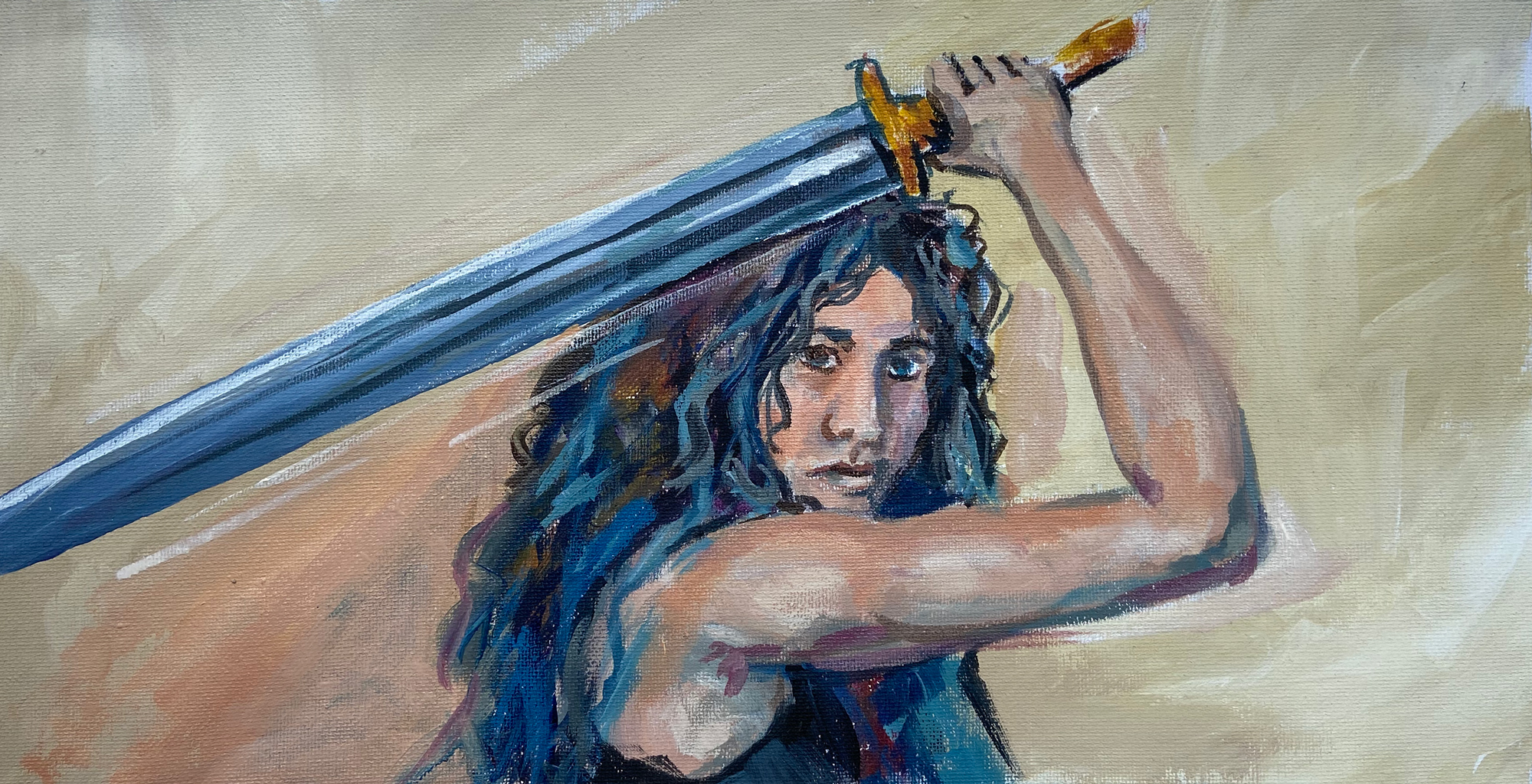
In the surrendering, you are free to shape a life that soars, the ropes of familial guilt that tethered you your whole long life before, finally cut with the sweep of your own sword. The sound of its swoosh music to your ears.
Geologists study the earth and the processes that shape it. Writers study the human heart and the processes that shape it. The GeologistWriter builds a bridge between the two. Come across it with me!




Recent Comments