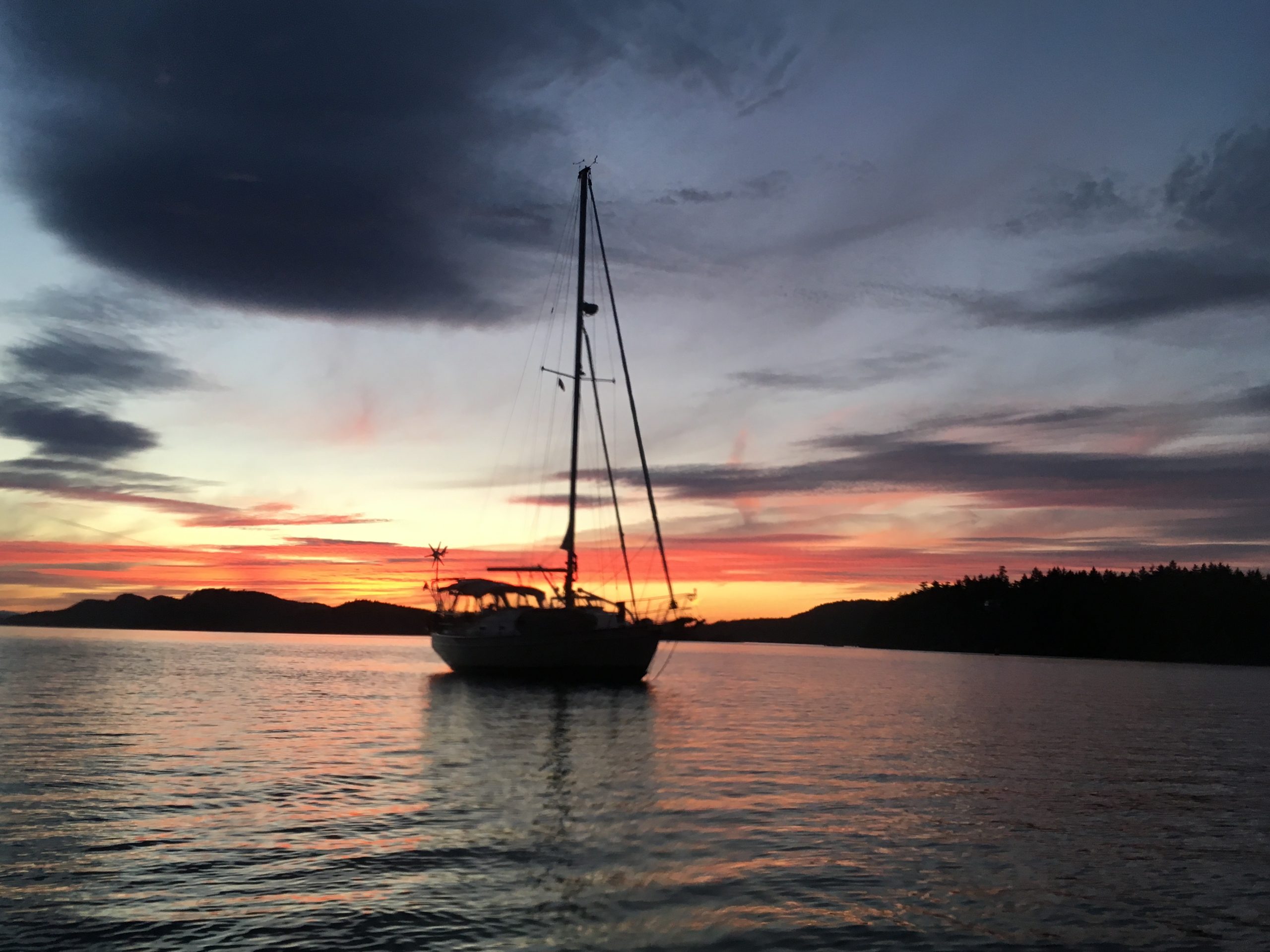
The closed doors (and borders) of the coronavirus pandemic have opened a different door for me–the possibility of “just” being a writer. Most summers, I’m attempting to write while sailing Kagán, and oh, yes, working to keep her running optimally and looking beautiful, too.
There are, indeed, many days at anchor when words find their way to the page. Wavelets rippling against the hull can be the perfect accompaniment for writing. But day-to-day cruising life, like day-to-day landlubber life, is rife with distractions.
This is not to say that the current climate we’re weathering isn’t distracting in its own worrisome way, even for those of us with the privilege to hunker down at home. But the myriad things-to-do and places-to-go choices I typically navigate have contracted significantly during the pandemic.
But it turns out there’s nothing “just” about being a writer. I imagine other artists face similar challenges, but the only artist’s journey I know is the one of creating a world with words. A young poet and I recently discussed our particular paths in verse and prose, reflecting on acts of radical vulnerability along them. It seems to me that is where art happens, where craft takes flight, and people’s hearts are opened by the work.
Years ago, a friend asked how I could let myself be so vulnerable in my writing, and I answered, “my words are not me.” And that’s true–when I’ve made the decision to let a piece go beyond my library’s walls, it is no longer solely mine. It’s my readers’ as well, for them to make their own meaning of. But I have been surprised of late at how much like me my words can feel. Real or perceived, intended or unintended, slights feel wounding, not physically (sticks and stones, etc.), but emotionally.
Still, I move through yoga postures that help me focus and place myself before the blank screen, or the filled screen (to re-write and re-write again, because artistic wings don’t soar without the craft to carry them aloft), and resolve to be radically vulnerable in this daily work of finding the words. To be a writer, just a writer, there is no other choice.
…sailors are, my mentor and friend, Nancy Erley said, when we spoke the other day. Nancy is a two-time circumnavigator, and the logistics of isolating in our homes is not unlike that of crossing an ocean in a small boat. Nancy is most certainly built for this.
We’d been talking about “provisioning”
for the stay-at-home orders we’re living under, but it’s not just grocery
shopping that parallels–I find myself thinking of meal planning, checking the
pantry, reviewing recipes, and coming up with back-up meals (contingency
planning for if my next trip to the store gets pushed farther out, just as it
might to sit out a storm at anchor, which seems an apt metaphor right now). When
you can run to the store to prepare what you decided to cook any given night,
you don’t have to do that. If you’re cruising on a sailboat where you won’t get
to a store for two, three, or more weeks, and when you do, you’ll be walking to
and from the store, carrying all that you bought, then doing a big shopping
trip before you cast off can make life a lot easier. Here on land, it can make
life a lot easier and safer now that our family’s, and indeed everyone’s,
health depends on minimizing exposure to each other. And thinking safety first
is one of the things that life on Kagán has taught me.
I don’t generally like grocery
shopping or cooking, not on land, anyway. But on the boat, it’s all part of
cruising, and I enjoy reading recipes and trying new ones. Seems that when the
pace slows from 75 mph to 6 knots, prepping and sharing meals becomes part of
the rhythm I love about life on the boat. It’s not completely unlike the slower
rhythm life has assumed in this time of social distancing, minus the background
music of water lapping on the hull.
It’s all about planning ahead. Inventory the pantry, freezer, and fridge. Check recipes, old standbys and ones you’ve been meaning to try. Make a list and organize it in sections, like the store is–produce, canned foods, spices, baking supplies, beverages, paper goods, etc. At the store, get everything that you need in one section before you move on to the next. I’ve heard that in some areas stores have instituted flow patterns, to help maintain social distancing. If yours has, and you know the direction, organize your list to flow through the store the way you will be. How’s that for smooth sailing on a provisioning trip?
Stowing groceries is also a
strategic operation for a long-term cruiser–first, because it actually makes a
difference in balancing the boat, and second, because who wants to be crawling
into the hard-to-get-to compartments on a routine basis. At home, we don’t have
to lift a mattress to get to the extra 12-pack of sparkling water or a bag of
kibble for Capi, but we have rearranged the pantry a bit, since we’re shopping
for much longer periods than we usually do in our land-based life.
In the large, deep, top-loading
fridge on Kagán, making sure to stow what’s to be used later in the cruise in
the depths saves electricity by minimizing the time the fridge is open, because
what we need early and often is handy. Saving electricity can mean an extra
night or two on the hook in a favorite anchorage. On land, you don’t have to
worry about listing to port or starboard, but stowing your provisions
thoughtfully can make life easier, and result in wasting less food. First night
post-shopping, serve those baby greens for salad, they won’t hold long. Then use
the romaine. And later on, cole slaw (because cabbage will hold while you sail
across an ocean or wait an extra week to venture to the store). In all my years
of cruising, I’ve learned that a little planning goes a long way. So, yes, I am
built for this.
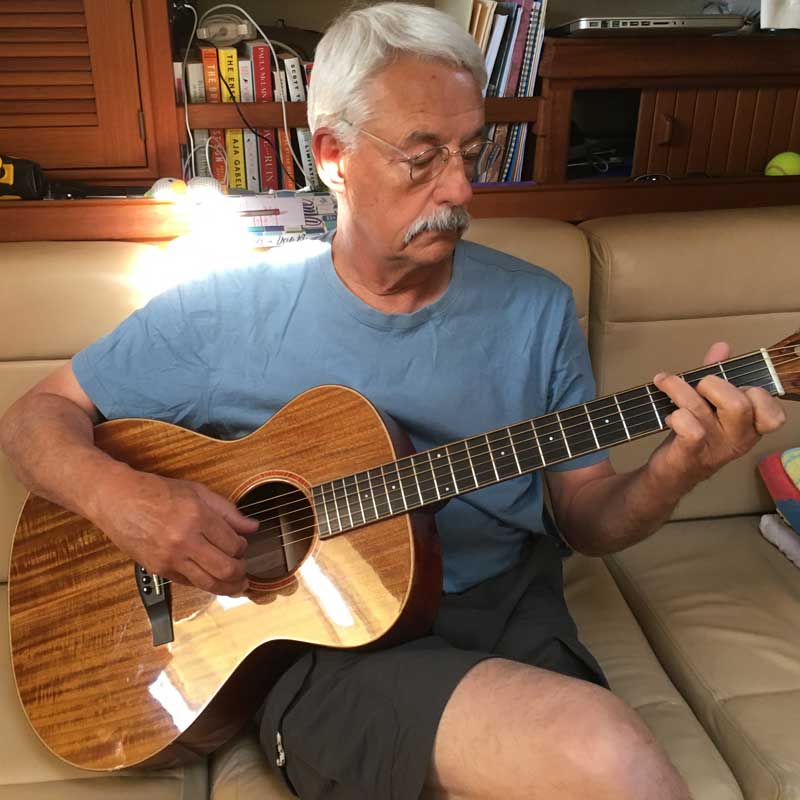
Another way sailors are built for this–we routinely live with our mates in close quarters for long periods. Kagán has been my self-contained, 35-foot sailing summer home for 15 years. By comparison, my modest sized adobe house is palatial. Though Kagán is very well appointed, there’s only so much elbow (and foot and hip and head) room on a 35-foot boat. We’ve learned to give each other space and time to be alone together on the boat–me reading or writing in the cockpit/Eric playing guitar in the salon or me doing yoga on the coach roof/Eric drinking coffee and reading in the cockpit. So we’ve adapted well to the situation of being in the house together much more than usual, with the added bonus of not tripping over each other (literally), an inevitable part of boat life where someone’s feet are nearly always in the way of wherever someone else wants to be.
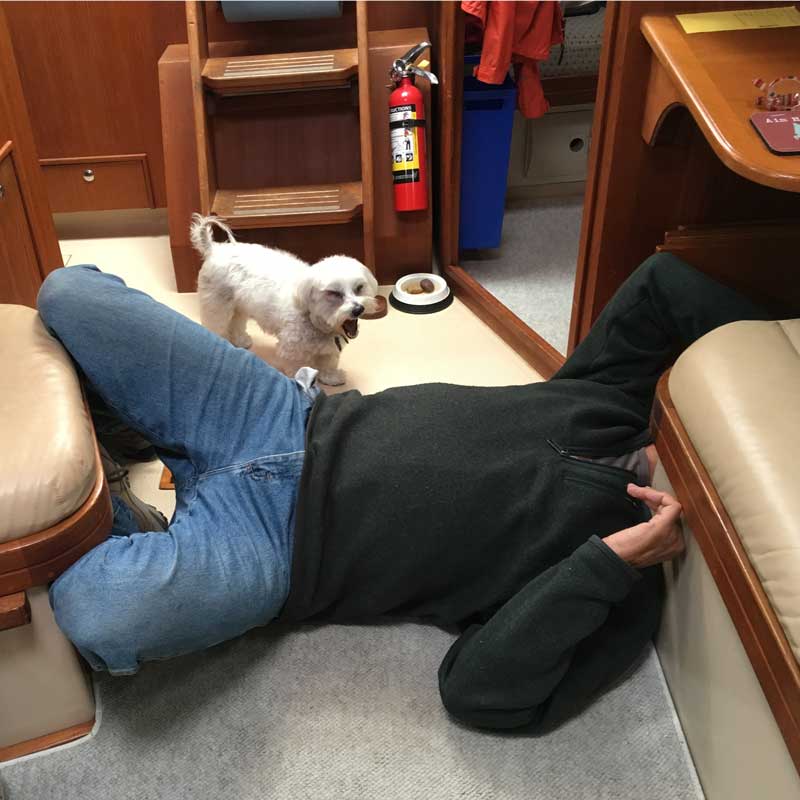
“Hey, Dad, did Mom hide my treats in the compartment under the navigation table with your potato chips?”
Sailing is a dream many hold, and I
wonder how many have longed for something like this long-term “cruise” right at
home without realizing it. Certainly we haven’t longed for the grief for those
we’ve lost, the anxiety around who may be struck next, concern for those on the
front lines of this crisis, or fears about finances. But maybe slowing life
down a bit will provide some time and space to dream, reflect, and plan for
what might be next. I know that my summers on Kagán have given me that over the
years. Amidst the anxiety of the moment, I’m trying to re-connect with that
rhythm. I love the phrase, you can’t change the wind, but you can adjust your
sails. Now is one of those times.
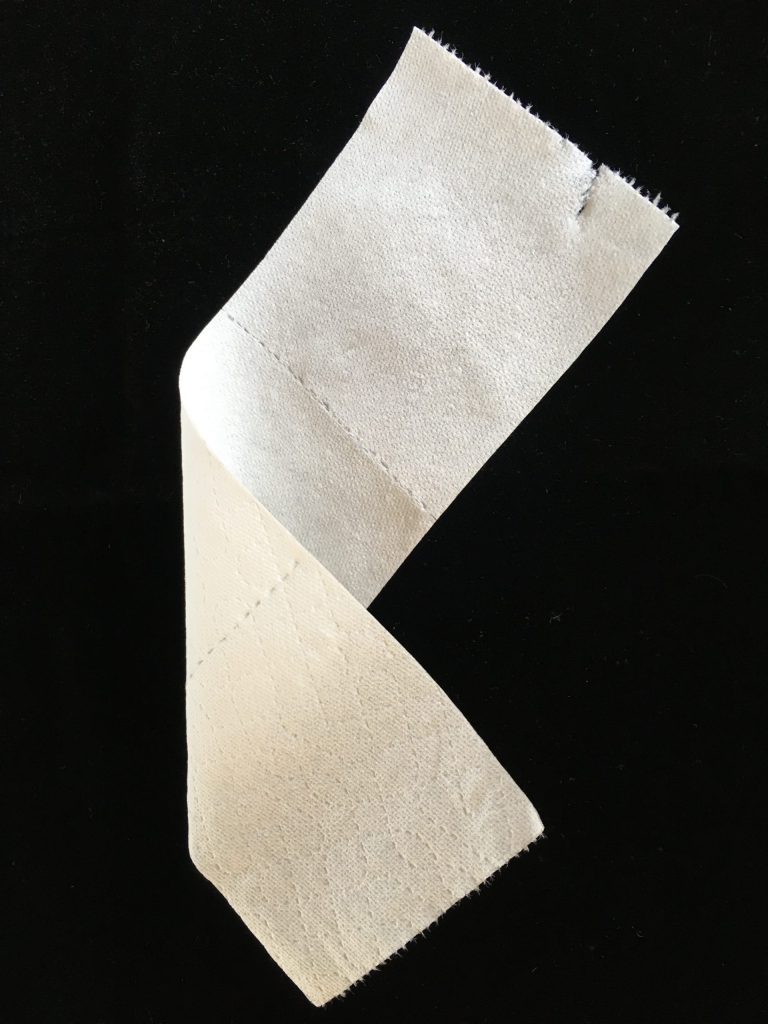
Note: I’d be remiss if I didn’t mention that sailors are also built for the TP problem. Any sailor who has had to unplug a marine head will tell you that three squares of TP at a time is the way to go (yes, pun intended). Do that and watch your valuable commodity go farther, see, you’re built for this too.
And a more important note: Fellow sailors, stay home! I’m writing this from my house, where I’m sheltering in place. And so should you. Thinking you can ride the coronavirus pandemic out long-term on your boat is irresponsible. Because there is just so long you can provision for, just so much waste your holding tank will hold, and you need to think of the impacts your going to shore will have on communities already struggling with scarce resources. Don’t be entitled. The seas will be there for all of us when fair winds blow again. For those full-time cruisers without a home port, I hope you can find a safe harbor to shelter in until those metaphorical fair winds do come.
Some of these words have been percolating through my mind for weeks, and I intended to transfer them to paper for Earth Day in April, but I think the time is right, right now.
In my last post back in November, I talked about rocks in my backyard, specifically the Madera Limestone. After traveling so much last year, I felt particularly grateful to be back in my own big backyard. But the travel also heightened my awareness of and appreciation for all our backyards. The way we move around the world makes so many places accessible to so many people – a friend recently spent a few days birding in Australia; which made me think of some special birds (Penguins!) I saw on travels to New Zealand; another friend recently returned from a language immersion program in Salamanca, Spain; and my first mate, Eric, and I live both on our sailboat cruising British Columbia’s coastal waters and here in the high desert of New Mexico. The whole world can feel like our backyard.
A conversation about backyards got me thinking about all this – a friend told me about a community group she heard was protesting expansion of an urban trail. That group, no doubt, uses the existing portion of the trail, but opposed the extension because it would go right by their backyards. This group would most likely be in favor of the extension, if it were to be located, say, one block over – not in their backyards, but in someone else’s. It’s a classic example of the NIMBY (Not-In-My-Back-Yard) principle.
For the Earth Day essay I contemplated, I was going to write about how we must consider our bigger backyards, our community backyards, indeed, our global backyard. Climate disruption should have us all thinking long and hard about that, and taking action.
But the novel coronavirus that causes COVID-19 has, within a few short weeks, brought the global picture into really sharp focus; focus I hope we don’t lose when this crisis fades from the headlines. Uncertainty, of nearly everything, except the spread of the disease, is pervasive. For many, fear follows on uncertainty’s heels. A sense of helplessness too.
For years, I’ve tried not to succumb to fears, but I’d be lying if I didn’t admit to a twisty feeling in my gut these days. A lot of people I love are in the higher risk groups for the impacts of COVID-19. I am too (yes, even if we don’t feel our age, if we’re of a certain age, there we are).
I know panic is not productive, and I know ways to quell it, so I’m reminding myself to do those things, not just think about doing them. And there is time and space now, as my normally busy schedule shifts with social distancing. Like breathing, for one. Yes, taking good, long, deep breaths. Yoga and meditation. Even for a few minutes at a time. And Capi, of course. For me, a little canine cuddle time can be a short cut to calm.
I’m also walking in my backyard, and thinking about all my backyards – from the one whose trail I’m hiking – to my Placitas community – to New Mexico – to the stunning American Southwest – to the entire U.S. – and to the global community. It appears to me from the reading I’m doing (and, please, do your reading from responsible sources – both the New York Times and Washington Post are offering free access to their coronavirus updates) that taking care of myself and my family is a good start in taking care of the wider community – that’s exactly how social distancing works. But we have to really do it – not just when it’s comfortable or convenient. We especially have to do it when it isn’t. For ourselves, for everyone.
And ways to help with that helpless feeling? Help those in my communities who are going to suffer from the financial hardships that have already begun, and will worsen before they get better. I can call my legislators and push them to vote for bills that will help families in need. I can donate to a food bank. I can shop online at small businesses (even if I don’t need anything, I can buy a gift certificate that will infuse them with a little cash, and help them survive this crisis). If we all take small steps, we can help in big ways.
We
live in a world where we can’t be NIMBYs – my backyard is your backyard
is our backyard – let’s take care of it, and each other.
Though it doesn’t occur beneath my feet unless I climb long and hard and high (as I did here), it’s my bedrock. The Madera Limestone crowns the rift-flank Sandia Mountains whose shadow I live in. I arrived here, shattered, after my husband died in an accident 22 years ago. Rebuilding a life, slowly, as I built a new home, stone by stone, adobe brick by adobe brick.
Years later, I walked the foothills every morning after surgery and during radiation treatment for breast cancer. The beauty and quiet replenish me when I’m depleted.
For the past year, I’ve had a great honor in my profession. I’ve served as the 31st Richard H. Jahns Distinguished Lecturer in Applied Geology, only the second woman in all those years to do so. What a privilege! Traveling to 25 states since October 2018, I spoke with students from 52 colleges and universities, letting them know that environmental and engineering geology is a profession in which they can make a living and make a difference. It’s been fulfilling. And exhausting.
This morning, I feel lucky to wake in my own bed, not wondering what city I’m in when my eyes flutter open. Not in a city at all. I walk a while, then sit myself down, my back against a sun-warmed boulder of Madera Limestone, grateful for this bedrock.
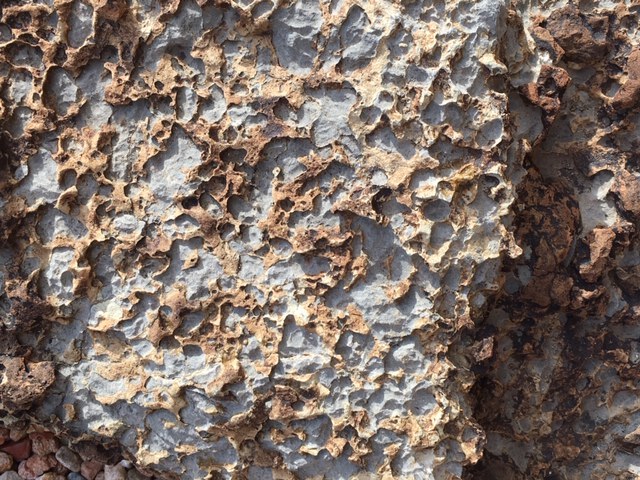
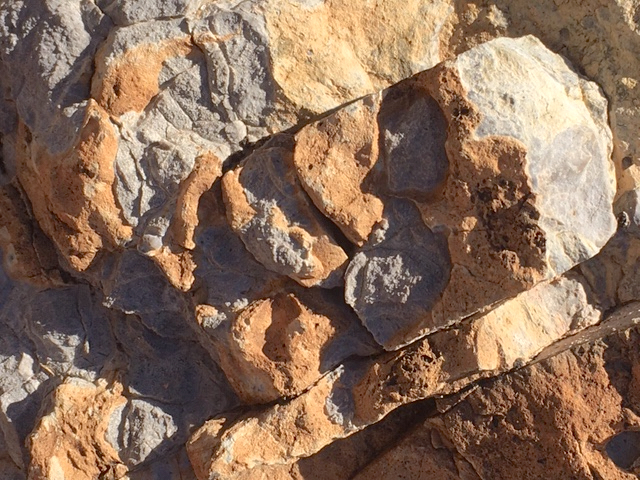
Formed 300 million years ago, when an ancient inland sea, nothing like today’s high desert landscape, filled this space. Skeletons of the more than 90 species of creatures that populated this ocean delight me today as fossils I happen upon on hikes. Brachiopods and bryozoans, corals and crinoids, to name just a few. The steel gray limestone itself, the intercalated golden brown chert, all remains (most in carbonate, some in silicate, form) of the rich marine life of that time.
Its journey to the top of the mountains, an epic – first, deposition in that long-ago sea; deep burial and lithification; later, rifting (tectonic extension) on the order of 30,000 feet of displacement on the rift-bounding faults; the angle of the faults (60-70 degrees from horizontal) resulting in the escarpment that defines Albuquerque’s skyline to the east – hundreds of millions of years in the making.
The shifting of tectonic plates, the advance and retreat of seas, the comings and goings of geologic time – though always moving, are also my bedrock, intellectually and philosophically. The enormity in scale and time, compared with my infinitesimal place and passing in the scene, is fascinating and freeing. The time I take to wander these trails, also time for mental meanderings. So good to be home, feeling this foundation beneath my boots, walking these trails, talking with you.
Tell me about your bedrock.
[Read more about the stunning Sandia Mountains in The Geology of Northern New Mexico’s Parks, Monuments, and Public Lands from the New Mexico Bureau of Geology and Mining Resources]
Aside from the majesty of the land- and seascapes, there are other ways I feel small during the summers on Kagán. Some feel good, some are less comfortable. Like everyone, what feels good to me is easy to think about and look at, like feeling small in my current knowledge. There’s so much to learn. About sailing. About life. I will never be bored. .
The less comfortable often come up as blind spots. Perhaps when I make a mistake on Kagán, fortunately, this summer, with no negative consequences, like injuries or boat damage (aside from the occasional buffable scratch or smudge). Or when I feel belittled by an off-hand comment, the sting of seeing a new sensitivity or, worse, one I thought I’d gotten over long ago (to the fellow sailor on some now-forgotten dock, the comment not-forgotten – yes, I do understand about seasickness, if only you’d have let me finish my sentence…). Or reading a book that opens my mind about issues or ideas, but then I think I should have known them already (specifically, How to Be Less Stupid About Race by Crystal M. Fleming PhD – Wow! A must read!).
Maybe with the slower pace of sailing life, I notice my reactions more. In the quiet nights swinging at anchor, I play those reactions over in my mind and my heart. Typically, my first reaction is beating up on myself, despite years of working not to do that. I’ve been self-critical as long as I can remember being. When I was a kid, my mom worried that I’d make myself sick, waking up in the middle of the night to add something to an assignment in an effort to get my homework perfect. Now, those assignments are expecting myself to know things before I’ve learned them (Come on, Deb, give yourself a break!), analyzing my imperfect interactions with my boyfriend or friends or even strangers on a dock (What would’ve been a better thing to say? Or to feel?), and my judgements of how I’ve handled moments to milestones of my life.
Harder to admit is that my next reactions are often defensiveness and anger, sometimes expressed and sometimes internalized.
I don’t like that I get defensive and angry. I don’t like that, more often, I can’t simply embrace who I am, what I know (and don’t know yet, and still don’t know that I don’t know), and not feel small (in a bad way). Simply writing that, saying it “out loud,” makes me feel a bit less small, a bit more courageous, about who I want to be in my relationships (especially the one with myself) and what I want to stand for in this world. That doesn’t mean I don’t feel vulnerable saying that. I do. Courage isn’t not being scared, sometimes it’s being scared, and doing it anyway.
Standing in those “harder to admit” admissions is where I find opportunities to grow (oh, great, another f—king growth opportunity…).
A quote from a recent blogpost on the website, A Life of Practice, by my dear friend, Sara Eisenberg, said it so well:
With the honesty and kindness we practice: we include one more piece of life, one more piece of life, one more piece of life. Which allows us to be the size we actually are – neither better and wiser, nor smaller and more foolish..
Geologists study the earth and the processes that shape it. Writers study the human heart and the processes that shape it. The GeologistWriter builds a bridge between the two. Come across it with me!










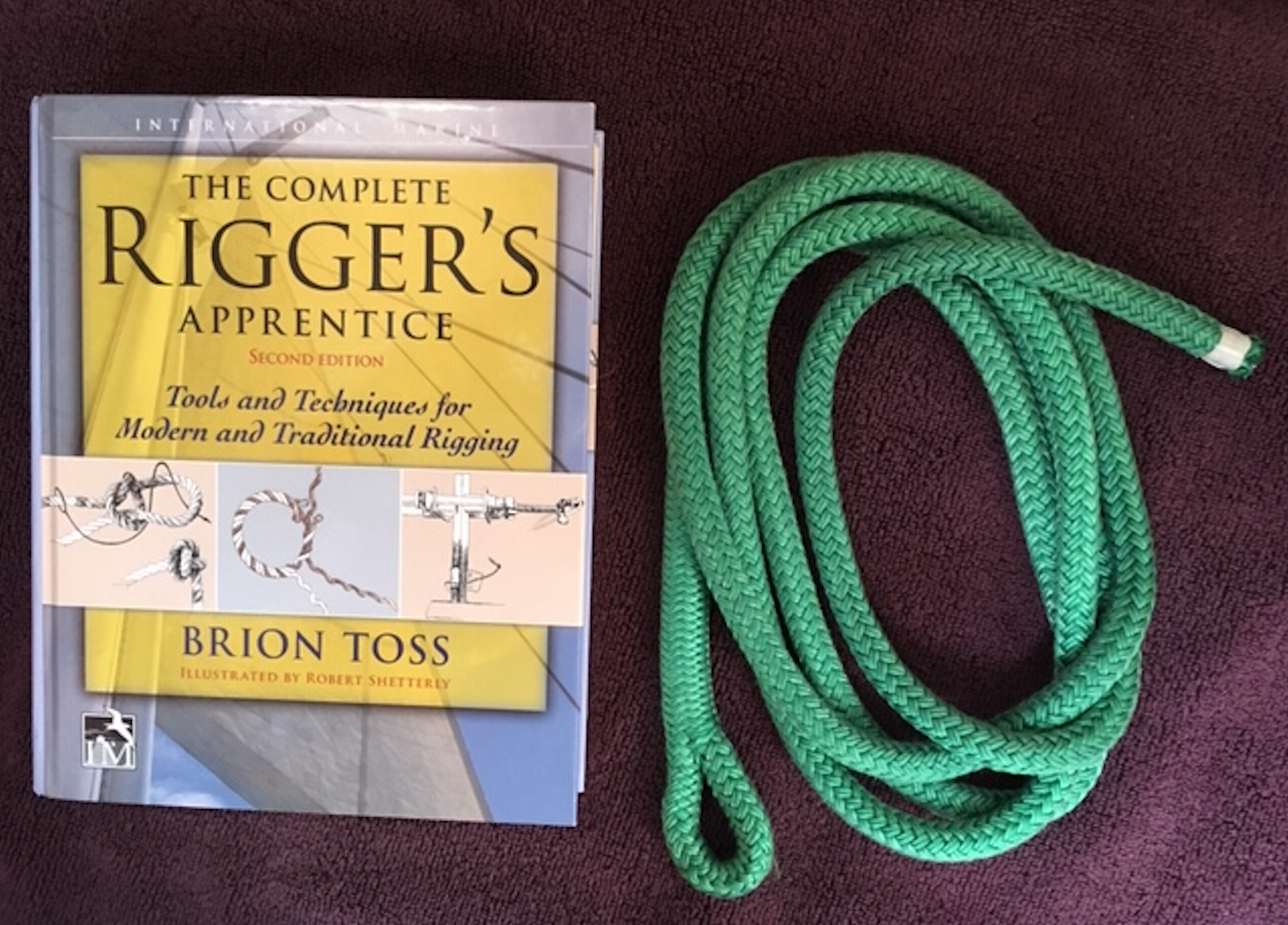
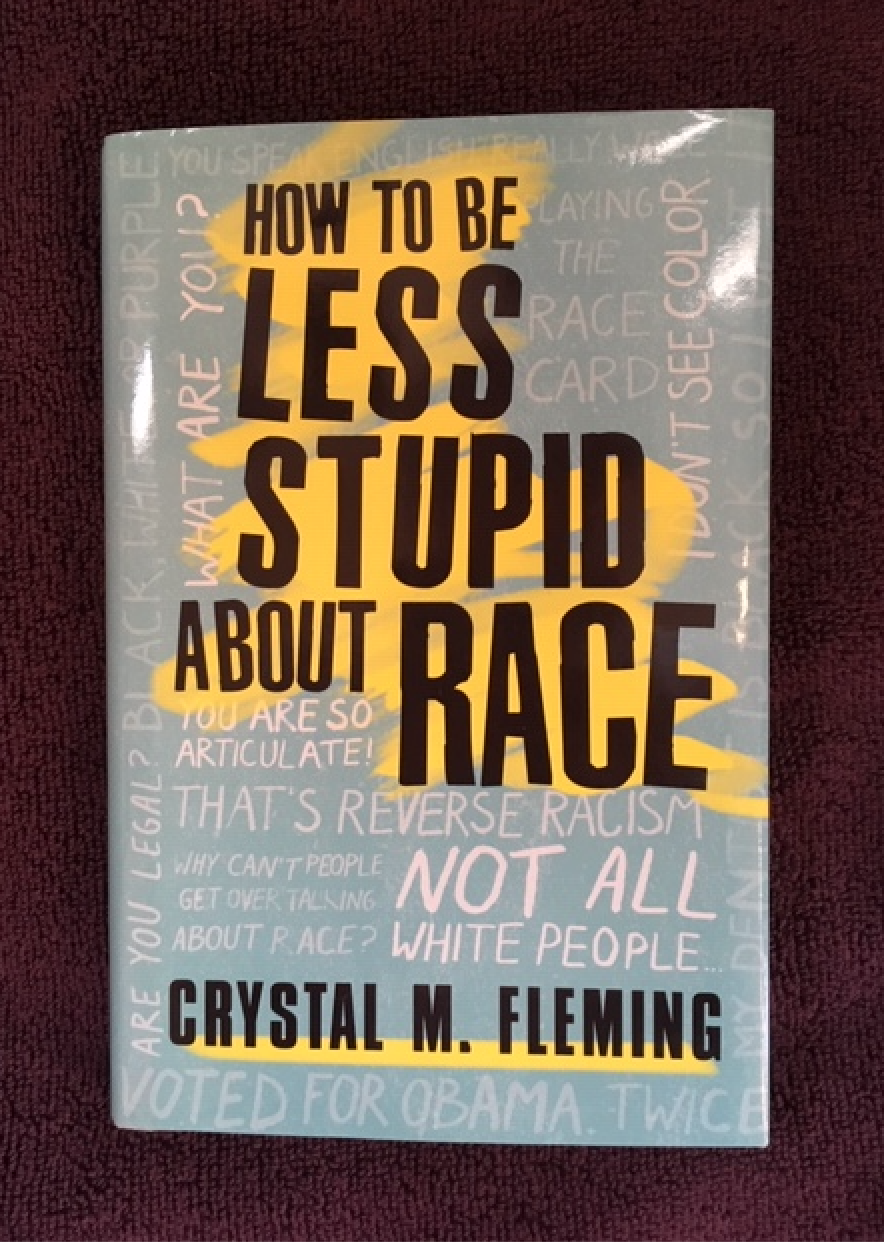 The less comfortable often come up as blind spots. Perhaps when I make a mistake on Kagán, fortunately, this summer, with no negative consequences, like injuries or boat damage (aside from the occasional buffable scratch or smudge). Or when I feel belittled by an off-hand comment, the sting of seeing a new sensitivity or, worse, one I thought I’d gotten over long ago (to the fellow sailor on some now-forgotten dock, the comment not-forgotten – yes, I do understand about seasickness, if only you’d have let me finish my sentence…). Or reading a book that opens my mind about issues or ideas, but then I think I should have known them already (specifically, How to Be Less Stupid About Race by Crystal M. Fleming PhD – Wow! A must read!).
Recent Comments